Hotline: +84 961 442 475 - +84 979 821 316 - +84 389 283 338
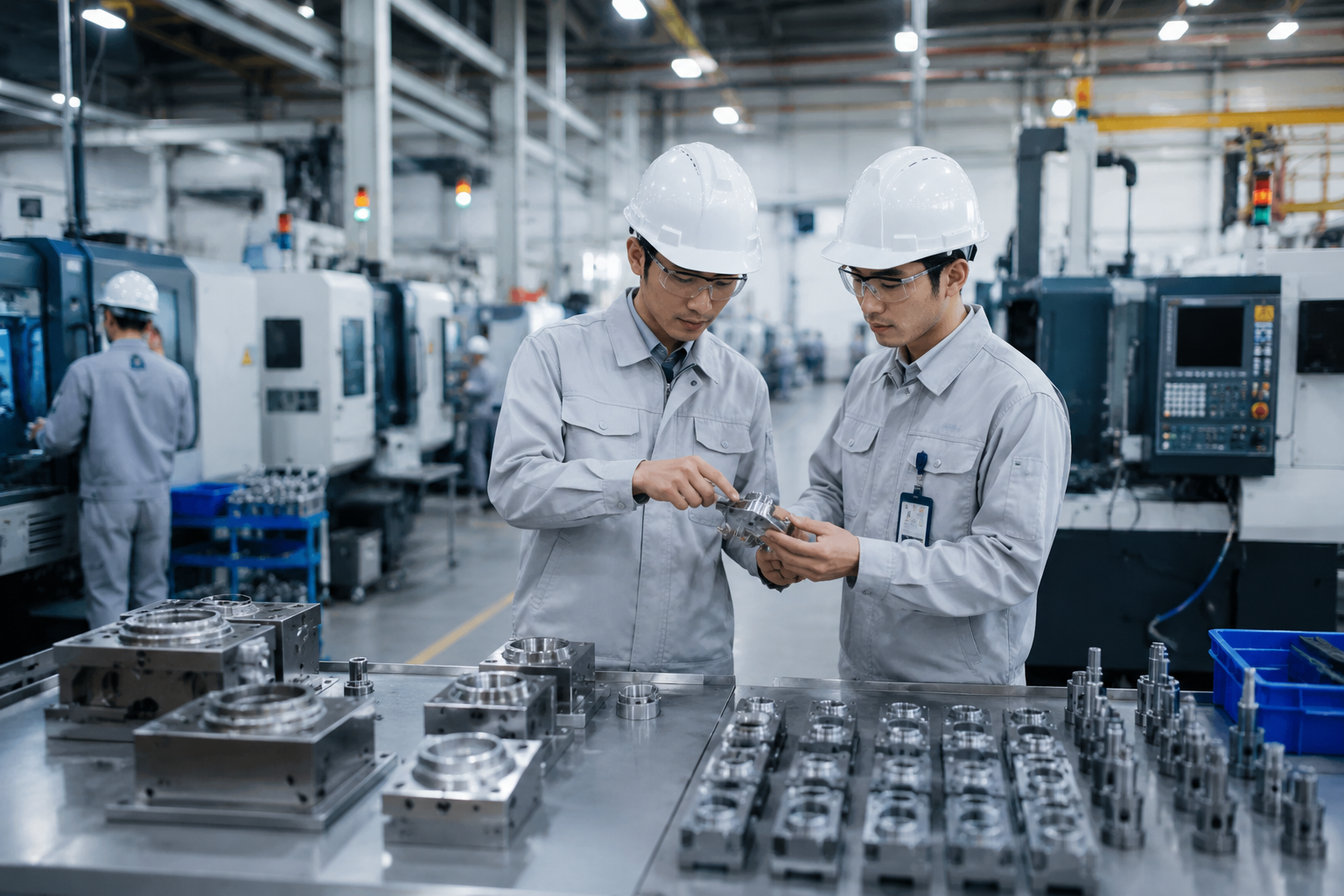
Pressure die casting of cast-iron and aluminum components is an important manufacturing method in modern mechanical engineering. This technology enables the production of metal components with high dimensional accuracy, excellent surface quality, stable structures, and suitability for mass production.
As industries increasingly require components with consistent quality, short production times, and optimized costs, pressure die casting has become a solution ed by many enterprises.
Pressure die casting is a process in which molten metal is injected into a mold under high pressure. After the metal cools and solidifies, the product is removed from the mold and undergoes additional finishing processes such as flash trimming, surface treatment, CNC machining, or quality inspection.
This method is commonly used to manufacture components made from aluminum, aluminum alloys, cast iron, and certain other metals. Thanks to its fast, accurate, and consistent forming capabilities, pressure die casting is particularly suitable for components with complex geometries.
Aluminum is lightweight, easy to form, corrosion-resistant, and highly thermally conductive. Pressure-die-cast aluminum components are commonly used in industries that require durable products with reduced weight.
Common products include machine housings, engine components, heat sinks, mechanical accessories, electronic components, and industrial equipment parts.
Cast iron offers high hardness, good load-bearing capacity, and suitability for components that require considerable mechanical strength. Cast-iron components are commonly used in industrial machinery, mechanical equipment, machine parts, and load-bearing structures.
Depending on technical requirements, cast-iron products may undergo additional machining to achieve the required dimensional accuracy, surface finish, and assembly performance.
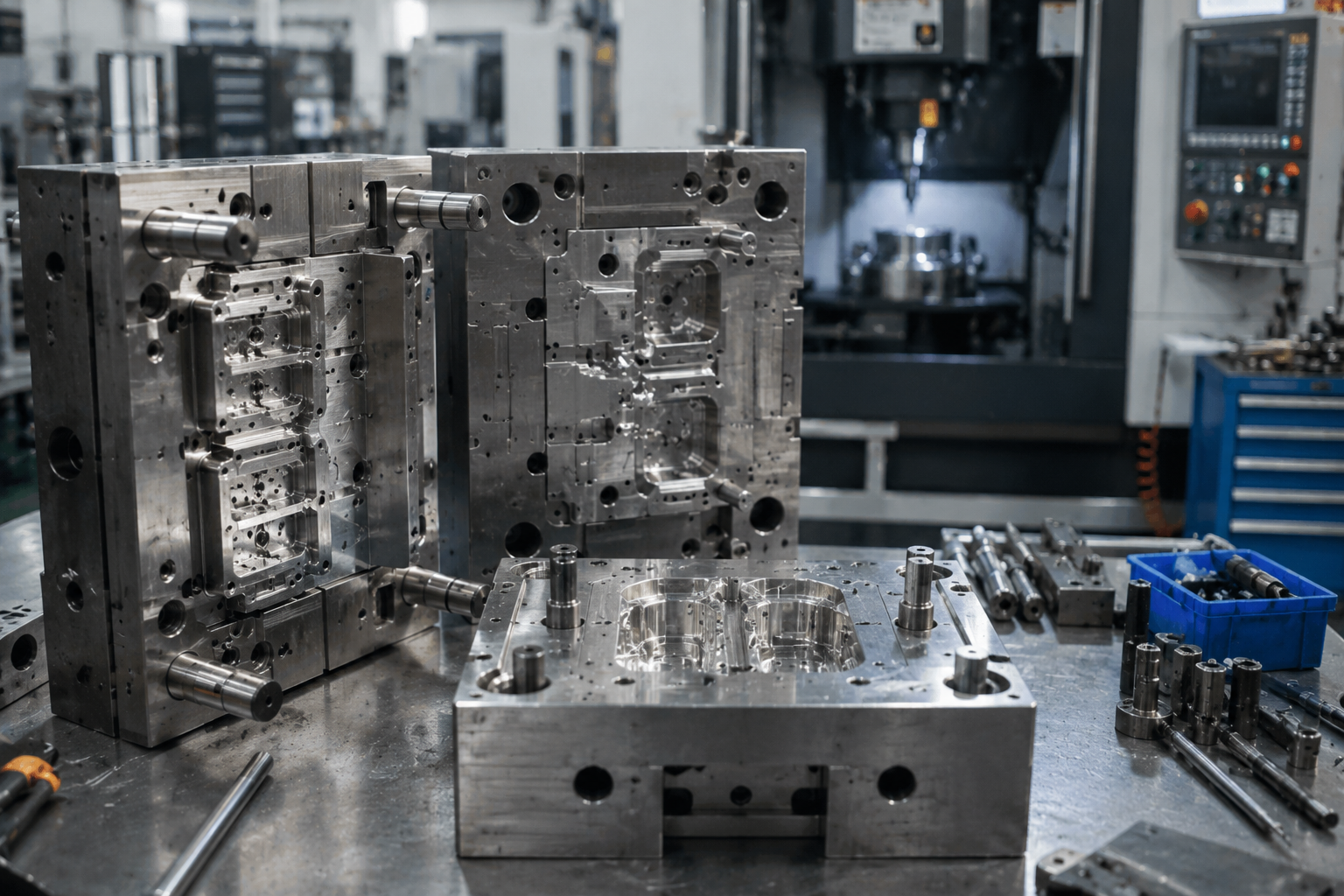
Before production begins, engineers receive technical drawings or physical product samples. Based on requirements concerning dimensions, materials, tolerances, and production volume, the manufacturer designs a suitable casting mold.
A high-quality mold helps products achieve high accuracy, minimizes defects, and ensures long-term production efficiency.
Cast iron or aluminum is heated to an appropriate temperature until it reaches a molten state. The melting process must be closely controlled to maintain a consistent material composition, minimize impurities, and improve product quality.
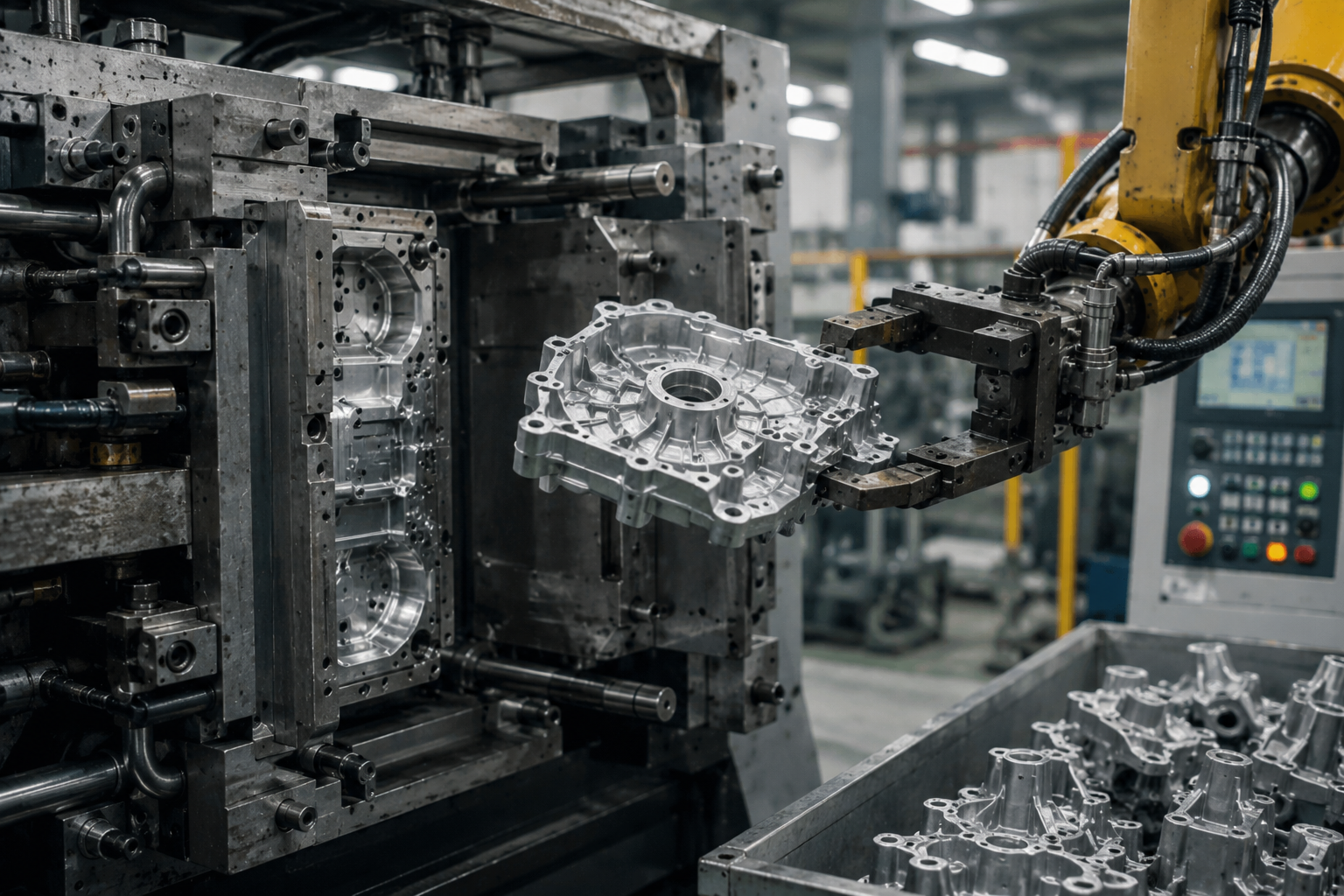
Molten metal is forced into the mold cavity under high pressure. The strong injection pressure allows the material to fill small features, corners, and complex geometries inside the mold.
This is a critical stage that determines the product's definition, consistency, and structural integrity.
After the metal solidifies, the product is removed from the mold. Cooling time must be calculated properly to prevent warping, cracking, or product deformation.
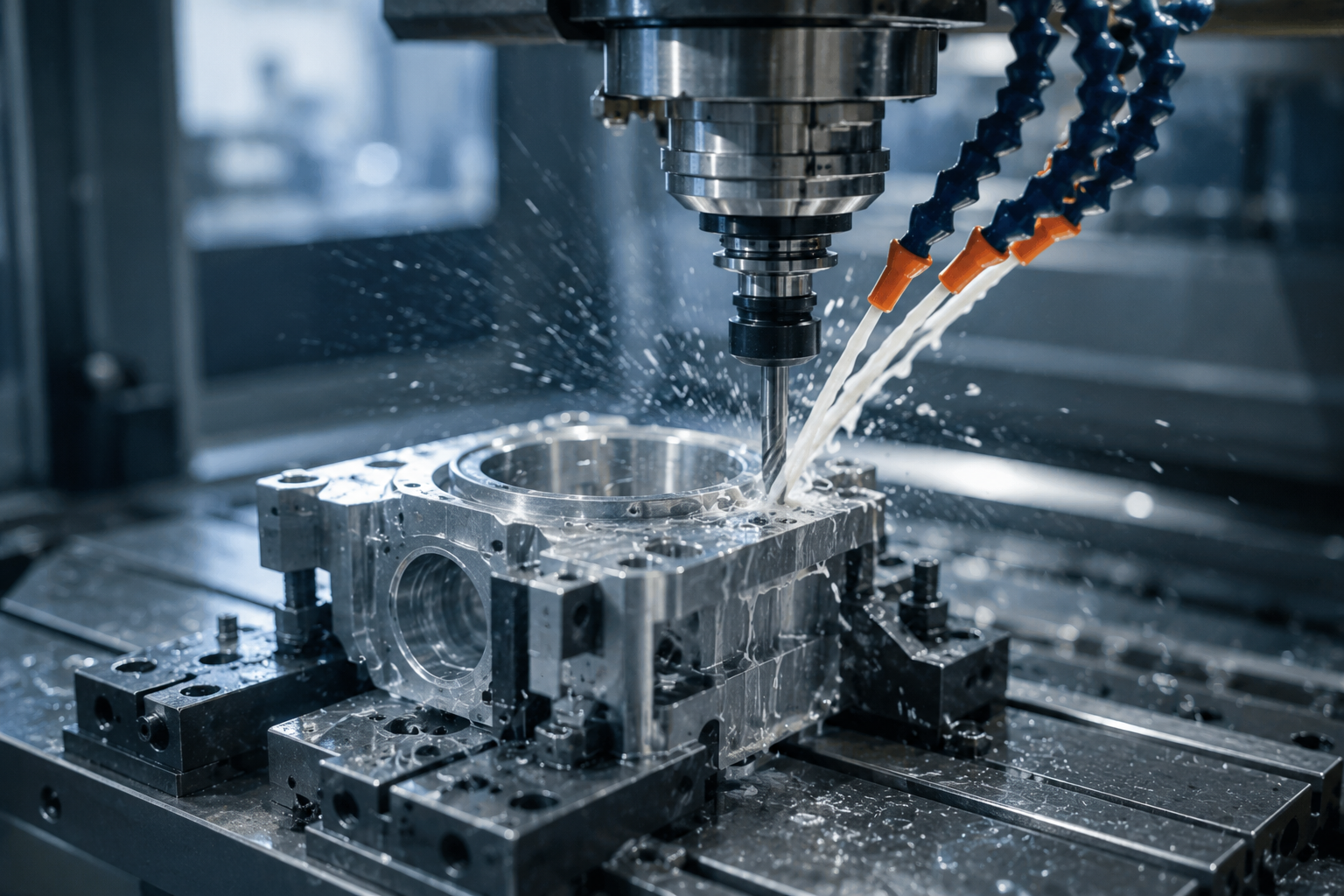
After casting, products may undergo additional processes such as flash trimming, grinding, polishing, CNC milling, CNC turning, drilling, thread tapping, coating, or surface treatment.
These processes help components meet technical specifications and prepare them for assembly.
Pressure die casting produces components with stable dimensions and minimal deviations. This is particularly important for components that must be assembled consistently in machinery, equipment, and production lines.
Because casting molds are manufactured with high precision, cast products generally have relatively smooth surfaces, few defects, and can be finished easily.
Once the mold has been completed, enterprises can manufacture large quantities of components within a short period. This is a significant advantage that helps reduce the cost per product.
Pressure die-casting technology can create products with multiple ribs, grooves, holes, thin walls, or geometries that are difficult to manufacture using conventional methods.
The casting process follows a fixed mold design, helping to reduce material waste and minimize rejected products during manufacturing.
Cast-iron and aluminum components are used in machinery, production equipment, fixtures, support frames, machine housings, and power-transmission components. Their durability and machining accuracy allow them to meet the requirements of continuous operation.
Aluminum pressure die casting is widely used to manufacture engine components, gearbox housings, cylinder-head covers, brackets, control arms, and other technical components. Aluminum helps reduce vehicle weight while maintaining the required strength.
Products such as equipment enclosures, heat sinks, component-protection housings, aluminum frames, and assembly components are commonly manufactured using pressure die casting.
Cast-iron and aluminum components are used in pumps, industrial valves, hydraulic equipment, pneumatic equipment, motors, industrial fans, and power-transmission systems.
Many household products, metal accessories, decorative components, and domestic appliances are also manufactured using pressure die-casting technology to achieve attractive designs and high durability.
The manufacturer should be capable of designing precise molds, optimizing product structures, and ensuring reliable mold operation throughout production.
Pressure die-casting machines, CNC machines, inspection equipment, and surface-treatment systems are important factors that determine product quality.
Each material, including cast iron, aluminum, and aluminum alloys, has distinct characteristics. An experienced manufacturer can suitable technical parameters to minimize defects and improve product durability.
Products should be inspected for dimensions, surface quality, hardness, tightness, load-bearing capacity, and stability before delivery.
Delivery schedules are particularly important for industrial orders. A professional manufacturer should ensure that products are delivered on time, in the required quantities, and according to technical specifications.
Gas porosity occurs when air becomes trapped in molten metal. This defect can be minimized by controlling the injection speed and material temperature and by designing an effective venting system.
Products may crack because of uneven cooling, substandard materials, or an inadequately optimized mold design. Controlling temperature and the cooling process helps reduce this risk.
Warping commonly occurs in components with thin walls or unbalanced structures. Proper mold design and suitable casting parameters help improve product stability.
Dimensional deviations may result from mold wear, unstable machinery, or inadequate inspection procedures. Molds should therefore be maintained regularly, and each production batch should undergo quality control.
Pressure die casting of cast-iron and aluminum components is an effective solution for enterprises requiring high-quality metal components with consistent dimensional accuracy and suitability for mass production. With advantages in productivity, durability, complex-forming capabilities, and cost optimization, this technology is increasingly applied across numerous industrial sectors.
Selecting an experienced manufacturer equipped with modern machinery and strict quality-control procedures helps enterprises obtain products that meet technical requirements, improve production efficiency, and respond effectively to market demand.
CATEGORIES
Mold, Jig and Fixture Products
Mold, Jig and Fixture Products
Mold, Jig and Fixture Products
Mold, Jig and Fixture Products
Mold, Jig and Fixture Products
Mold, Jig and Fixture Products
Mold, Jig and Fixture Products
Mold, Jig and Fixture Products
Mold, Jig and Fixture Products
Mold, Jig and Fixture Products
Mold, Jig and Fixture Products
Silicone Foam for the Garment Industry
1 mm Heat-Resistant Silicone Sheets
5–10 mm Heat-Resistant Silicone Rubber Sheets
PA, PU and MC Nylon Plastic Wheels
PA, PU and MC Nylon Plastic Gears
Plastic and Rubber Gasket Products
Gotech GT-7002-DL Large Transport Vibration Simulator
Victor VC4090A Digital LCR Meter
DC-5600 Multifunction Abrasion Tester
Edberg HP-100-200-500 Push-Pull Force Gauge
JK-6000A Universal Tensile and Compression Testing Machine
Nikon V-12B Optical Profile Projector
Apex P5 Airborne Particle Counter
Y09-301 Laser Particle Counter
Total Meter HT9600 Handheld Particle Counter
TSI AeroTrak 9303 Handheld Particle Counter
Coordinate Measuring Machine (CMM)
Hand-Lever and Push-Button Pneumatic Valves
CKD Pneumatic Pressure Regulator
CKD 3/4/5-Port Pneumatic Valves
CKD 3/4/5-Port Pneumatic Valves
CKD 3/4/5-Port Pneumatic Valves
Festo GRLA One-Way Flow Control Valve
Festo LR-M5-QS-4-153532 Pressure Regulator
Festo QH-QS-6-1/8 Hand-Operated Pneumatic Ball Valve
Festo VHEM-L-M52-G14 Mechanical Valve
Pneumatic Quick Couplings and Air Manifolds
EVD Digital Pneumatic Pressure Regulator
AirTAC Linear Slides and Guide Rails
Digital Pressure Sensors and Pneumatic Filters
Valve-Integrated Pneumatic Cylinders
Industrial Push Buttons and Emergency Stop Buttons
Delta Electronics Programmable Logic Controllers (PLCs)
Industrial Servo Motors and Stepper Motors
Mitsubishi Electric Programmable Logic Controllers (PLCs)
Measuring Tools and Calculators
Label Printers and Printing Paper Rolls
Cleanroom and Respirator Masks
EVA Shock-Absorbing and Anti-Slip Adhesive Pads
Hision VMC1000II CNC Vertical Milling Machine
Mazak VCN-410A-HS CNC Milling Machine
Fodatech Autocut CNC Multi-Pass Wire-Cutting Machine
Haitian MA1600 160-Ton Plastic Injection Molding Machine
Haitian MA2000 200-Ton Plastic Injection Molding Machine
Haitian MA1200 120-Ton Plastic Injection Molding Machine
Haitian MA900 90-Ton Plastic Injection Molding Machine
Haitian MA600 60-Ton Plastic Injection Molding Machine
Haitian MA6000 600-Ton Plastic Injection Molding Machine
Haitian MA5300 530-Ton Plastic Injection Molding Machine
Haitian MA4500 450-Ton Plastic Injection Molding Machine
Haitian MA3800 380-Ton Plastic Injection Molding Machine
Haitian MA3200 320-Ton Plastic Injection Molding Machine
Haitian MA2500 250-Ton Plastic Injection Molding Machine
Applications of Plastic Injection Molding Machines with Clamping Forces from 50 to 600 Tons
Toshiba DC350R 350-Ton Aluminum Die-Casting Machine
Toshiba DC350J-SX 350-Ton Aluminum Die-Casting Machine
Toshiba DC350J-MS 350-Ton Aluminum Die-Casting Machine
OEM/ODM Manufacturing for FDI Enterprises: Trends in Vietnam’s Manufacturing Industry
The Role of Precision Machining in Modern Industrial Manufacturing
Mold Design and Manufacturing – The Foundation of High-Quality Mass Production
Die Casting of Cast Iron and Aluminum Components and Its Industrial Applications
Supply of General Industrial Materials – A Reliable Solution for Manufacturing Plants
Featured Products & Services
*YOU MAY ALSO LIKE
For all inquiries regarding precision machining, component casting, plastic machining, industrial supplies, and OEM/ODM cooperation, please contact V3 for prompt and dedicated support.
V3 Industry specializes in precision machining, component casting, OEM/ODM plastic processing, and the supply of industrial materials. With a modern factory system, the company serves both domestic and international FDI enterprises.
V3 Industrial Investment and Environment Consulting Company Limited
Address: No. 79/49 Tran Phu Street, Gia Vien Ward, Hai Phong City
Telephone: +84 979 821 316
Hotline: +84 961 442 475
Call center: +84 389 283 338
Email: v3groupindustrial@gmail.com
V3 Industrial Investment and Environment Consulting Company Limited
Địa chỉ: No. 79/49 Tran Phu Street, Gia Vien Ward, Hai Phong City
Business Registration Certificate No. 0202252828, issued by the Hai Phong City Department of Planning and Investment on August 8, 2024.
Content Manager: VU THI LANH
@ Copyright by V3 Industrial Investment and Environment Consulting Company Limited. Designed by Vietnam Yellow Pages.